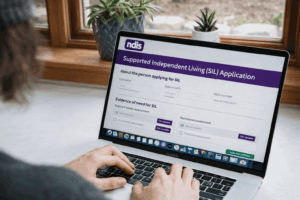
Applying for Supported Independent Living (SIL) funding can feel overwhelming at first. There are forms, reports, planning meetings, and different types of home and living supports to consider. The good news is that you do not need to figure it all out alone, and the overall process can be broken into clear, manageable steps.
This guide explains, in simple language, how to apply for SIL funding under the NDIS. It is not legal or financial advice, and it cannot guarantee an outcome, but it will help you understand what SIL funding usually covers, what the NDIS often looks for, and how to work with your Support Coordinator and provider through each step.
What SIL Funding Covers And What It Does Not
Before starting the application, it helps to understand what SIL funding is designed to pay for. SIL supports are mainly about the help you receive from staff, not the building itself.
SIL funding typically covers:
- Support workers who help with daily tasks such as cooking, cleaning, and personal care
- Support with building skills like budgeting, household routines, and community access
- Overnight support where it is needed for safety or reassurance
- Shared support in a home with other participants who have similar needs
SIL funding does not usually cover:
- Rent or mortgage repayments
- Food and personal groceries
- Household bills such as electricity and internet
- Furniture or personal belongings
Other parts of an NDIS plan, and separate income such as rent assistance or personal income, may be used for those costs. If you are unsure how these elements fit together, it is important to ask your NDIS planner or Support Coordinator so that you can make informed decisions.
For a broader overview, you can read this introductory article first:
What Is Supported Independent Living and How Does It Work Under the NDIS.
Who Is Usually Considered For SIL
The NDIS looks at SIL for people who need a significant amount of help with daily tasks, often every day of the week. SIL is most commonly used when a person lives with other participants in a shared home, and needs support to live as independently as possible.
Although each decision is individual, SIL is more likely to be considered when:
- A person needs regular support with personal care and daily routines
- There are health or safety risks if support is not available
- Family or informal supports cannot safely meet the person’s needs long term
- The person would benefit from structure, routine, and support to build independence
Eligibility and funding are always decided by the NDIS after looking at reports, assessments, and information about the person’s needs and goals. This is why preparing good quality information before asking for SIL is so important.
Step-by-Step: How To Apply For SIL Funding
While every situation is different, most SIL funding applications follow a similar pattern. Below is a simple step-by-step guide to help you understand what usually happens and where to focus your energy.
Step 1: Identify Support Needs And Goals
The first step is to be very clear about what support is needed and why. This includes day to day tasks, health and safety concerns, and long term goals such as independence, routine, and housing stability.
You can start by writing down:
- What support is needed during a typical day and night
- What is hard to do without support
- What would improve if the right support was in place
- What the person wants in terms of living arrangements and independence
Step 2: Gather Assessments And Evidence
The NDIS usually relies on written evidence to understand whether SIL is reasonable and necessary. This may include reports from occupational therapists, psychologists, medical specialists, allied health professionals, and other people involved in the person’s support.
Useful information may cover:
- Daily living skills and where support is needed
- Safety concerns if the person is left alone
- Current living situation and why it is not suitable or sustainable
- How SIL would help the person work towards their goals
Your Support Coordinator or Local Area Coordinator can help identify what evidence is most relevant. It is better to have clear, specific information than large amounts of general paperwork.
Step 3: Work With Your Support Coordinator
A Support Coordinator can be very helpful in guiding you through the SIL funding process. They can help you:
- Understand NDIS home and living guidance
- Gather and organise reports and assessments
- Complete any required request forms
- Communicate with the NDIS about next steps
If you do not currently have Support Coordination in your plan, you can discuss this with your planner or Local Area Coordinator. For some people, having Support Coordination approved first can make the SIL process smoother.
Step 4: Submit A Home And Living Request
To formally ask the NDIS to look at SIL, you will normally need to complete a home and living request or similar form. This is where you explain the type of support you are asking the NDIS to consider and share the evidence you have gathered.
Your Support Coordinator or planner can help make sure the information is complete and clearly linked to your goals. It is important that the request explains why SIL is the most suitable option, compared to other supports or living arrangements.
Step 5: NDIS Review And Decision
Once the request is submitted, the NDIS will review the information. This may involve:
- Reading reports and assessments
- Considering whether SIL is reasonable and necessary
- Looking at alternative home and living supports
- Contacting you or your Support Coordinator for more information
The time frame for a decision can vary. If there are delays or questions, it can help to stay in contact with your Support Coordinator and respond to any requests for additional information as soon as possible.
Step 6: Choosing Your SIL Provider
If SIL funding is approved, the next step is to consider which provider and home will be the best fit. This is where you look at location, housemates, routines, staff approach, and the provider’s experience.
You might find it helpful to read:
SIL Homes in Newcastle: What to Look For and
Choosing an NDIS SIL Provider: 7 Questions to Ask.
Bright Tomorrows can discuss current SIL vacancies and explain how their homes are structured for men who benefit from calm environments and predictable support.