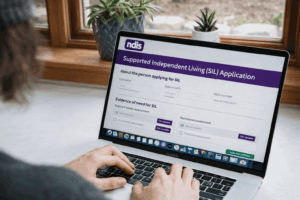
This guide explains what the new NDIS mandatory registration rules mean for participants and families, and why choosing a registered SIL provider matters more than ever.
💡 Did you know?
Until now, many NDIS providers operated without being registered. From 1 July 2026, that changes for Supported Independent Living providers. Every SIL provider must now be registered with the NDIS Quality and Safeguards Commission.
What Is the Difference Between a Registered and Unregistered Provider?
For most of the NDIS’s history, providers have fallen into two categories. Registered providers are approved by the NDIS Quality and Safeguards Commission and must meet the NDIS Practice Standards, complete independent audits, conduct worker screening checks, and comply with ongoing reporting requirements.
Unregistered providers have been able to deliver certain supports without going through this process. Participants who self-manage or plan-manage their funds have been able to use them, which gave flexibility. But it also meant less oversight in parts of the market.
What Is Changing From 1 July 2026?
In December 2025, the Government announced that mandatory registration for Supported Independent Living providers and NDIS platform providers will begin from 1 July 2026.
This means every provider delivering SIL supports must register with the NDIS Commission, regardless of how the participant’s plan is managed. There are no exceptions for this category of support.
📅 Key Date: 1 July 2026
All Supported Independent Living providers must be registered with the NDIS Commission from this date. Unregistered SIL providers will no longer be able to legally operate in this space.
The change follows years of recommendations from the NDIS Review, the Disability Royal Commission, and the NDIS Provider and Worker Registration Taskforce, all of which called for stronger oversight of SIL providers.
Why Is This Happening?
SIL involves some of the most intensive and personal support a participant can receive. It often includes 24-hour care, assistance with daily tasks like showering and personal hygiene, and living in shared accommodation with other participants.
Given the level of vulnerability involved, the Government determined that stronger regulation is necessary to protect participants and lift the overall standard of care across the sector.
As NDIS Commissioner Louise Glanville has noted, registration is not a once-off exercise. Providers must continuously meet quality standards or face accountability through the Commission.
📍 Local insight
In Newcastle and the Hunter region, these changes mean participants and families can have greater confidence that any SIL provider they work with has met a clear and independently verified standard of care. It is a meaningful step forward for quality and safety in the local market.
What Does This Mean for Participants?
If you are currently supported by a registered SIL provider, this change should be largely seamless. Your provider already meets the required standards.
If you are using an unregistered SIL provider, now is the time to check in with them. They will need to have registered, or be in the process of registering, before 1 July 2026. If they cannot or choose not to register, you may need to transition to a registered provider.
A few things worth knowing as a participant:
- You retain the right to choose your provider. Mandatory registration does not remove participant choice, it simply requires that providers meet a minimum standard.
- Registered providers must meet the NDIS Practice Standards, covering areas like person-centred support, privacy, incident management and worker qualifications.
- If your provider transitions to registration, your existing service agreements should remain in place unless otherwise communicated.
- If you need to find a new registered SIL provider, your Support Coordinator can help you navigate the process.
What About Platform Providers?
Platform providers operate profile-based apps or websites that connect participants with support workers. These providers will also be required to register from 1 July 2026. If you use this type of service it is worth checking directly with the platform about their registration status and transition plans.
What About Support Coordinators?
Mandatory registration for support coordinators was proposed but has since been paused while the NDIS Commission considers further reform. Support coordinators are not included in the July 2026 changes, but this may evolve as the broader reforms continue.
What to Look For in a Registered SIL Provider
Registration sets the floor, not the ceiling. Being registered means a provider meets the minimum required standards, but there is still a meaningful difference between providers who simply comply and those who genuinely invest in quality, matching and long-term outcomes.
When choosing a SIL provider in Newcastle and the Hunter region, look for:
- A clear and transparent approach to matching participants to homes and housemates
- Consistent staffing and low staff turnover
- A demonstrated commitment to building independence, not just delivering care
- Strong communication with families and Support Coordinators
- A home environment that feels genuinely lived-in and comfortable, not institutional
If you are unsure what to look for, this guide can help:
Choosing an NDIS SIL Provider in Newcastle
How Bright Tomorrows Approaches Registration
Bright Tomorrows is a registered NDIS provider. We meet the quality standards, worker screening and audit requirements that registration demands, and we are committed to continuously meeting and exceeding them.
Our focus is on creating stable, well-matched homes for men in Newcastle and the Hunter region, where participants can build genuine independence over time. We welcome the new rules as a raising of the bar across the sector.
To explore our current SIL options, visit:
SIL Vacancies in Newcastle
Frequently Asked Questions
Do I need to do anything if my current SIL provider is already registered?
If your provider is already registered with the NDIS Commission, you do not need to take any action. The changes from 1 July 2026 are primarily aimed at bringing unregistered SIL providers into the regulated market.
What happens if my SIL provider does not register by July 2026?
Providers who do not register will no longer be able to legally deliver SIL supports under the NDIS. If your provider cannot register, you may need to transition to a different provider. Your Support Coordinator can help you explore your options.
Does this change affect my plan or my funding?
The new rules relate to provider registration requirements, not to participant funding levels. Your SIL funding in your plan is not directly affected by these changes.
Can I still choose my own SIL provider under the new rules?
Yes. Participant choice and control remains a core principle of the NDIS. The difference is that from July 2026, any SIL provider you choose must be registered with the NDIS Commission.
How do I check if a provider is registered?
You can search for registered NDIS providers on the NDIS Commission website or use the provider finder on the main NDIS website at ndis.gov.au.
Key Takeaways
- From 1 July 2026, all SIL providers must be registered with the NDIS Commission.
- Every SIL provider must meet quality standards, pass independent audits and conduct worker screening.
- Participants keep the right to choose their provider, but that provider must now be registered.
- If your current provider is unregistered, check their registration plans now.
- Registration sets a floor, not a ceiling. Choose a provider who goes beyond the minimum.
If you are looking for a registered SIL provider in Newcastle, you can reach out via our
contact page to start a conversation.